How I Recovered Organic Traffic After a Major Google Search Decline
An informational website experienced a sharp drop in Google Search traffic in June 2026. The decline continued into July, with daily clicks falling to very low levels. I worked on the backlink profile, existing content, site speed, and technical SEO. I also built relevant backlinks and tracked the results through Google Search Console.
This case study shares the work completed, the traffic data, and the lessons learned during the recovery period.
1. What Happened to the Website?
The website saw a sharp decline in Google Search clicks and impressions in June 2026. Traffic continued to fall over the following weeks, reaching very low levels by late July and early August.
The timing raised concerns about a possible connection with Google’s spam-related changes. However, timing alone does not prove that a specific Google Spam Update caused the decline. I reviewed the website’s backlinks, content, performance, and technical setup before working on improvements.
Spammy Backlinks
The website had a large number of suspicious backlinks that needed review.
Daily Average at Its Lowest
Google Search clicks dropped to an average of six per day during the reported period.
2. SEO Work I Completed
I focused on the website’s backlink profile, content quality, speed, and technical setup. The goal was to improve the site’s overall SEO rather than rely on one change.
Backlink Review and Cleanup
I reviewed the backlink profile and identified suspicious links. Where possible, I worked to remove unwanted links and used Google’s disavow tool for selected backlinks that I considered harmful.
Relevant Link Building
I worked on building relevant backlinks from stronger websites to improve the site’s link profile. Relevance and quality were more important than simply increasing the backlink count.
Existing Content Updates
I reviewed and updated existing articles to improve their usefulness, clarity, and coverage of the topics readers were searching for.
Technical SEO and Speed
I worked on website speed and technical SEO issues to improve the site’s performance and make its pages easier for search engines to crawl and understand.
3. Google Search Console Traffic Data
The following figures show the reported average daily clicks and impressions for selected periods. They show how sharply search visibility fell and how it later improved.
| Period | Daily Clicks | Daily Impressions |
|---|---|---|
| June 14–18, 2026 | 339 | 15,875 |
| June 22–26, 2026 | 182 | 9,872 |
| June 27–July 3, 2026 | 30 | 912 |
| July 24–August 12, 2026 | 6 | 381 |
| August 23–September 1, 2026 | 253 | 16,791 |
| October 12–21, 2026 | 560 | 24,708 |
| October 21, 2026 | 572 | 29,329 |
The data shows a strong improvement in daily clicks and impressions by October. The daily figures for October 21 are a single-day result, while the October 12–21 figures are averages for that period.
4. Google Search Console and Analytics Evidence
I used Google Search Console to track search clicks, impressions, click-through rate, and average position. Google Analytics provided a separate view of users and sessions across traffic sources.
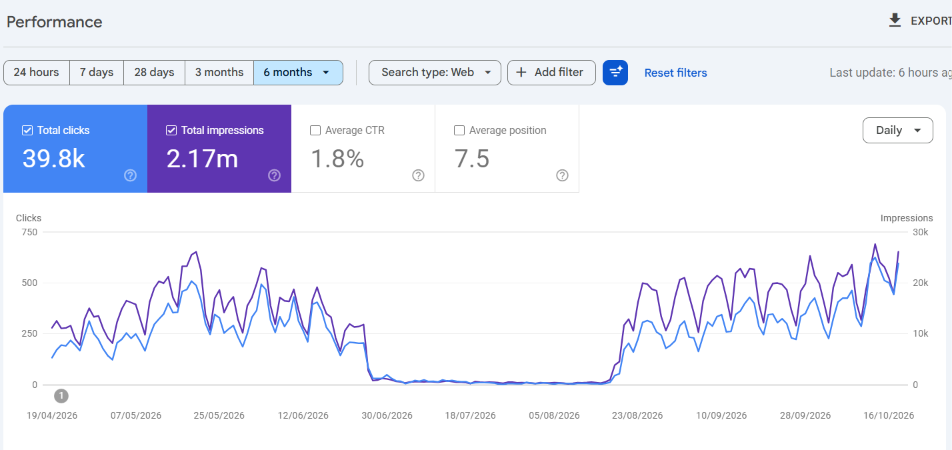
Google Search Console: 39.8K clicks, 2.17M impressions, 1.8% average CTR, and 7.5 average position for the selected six-month period. Select the image to view it at full size.
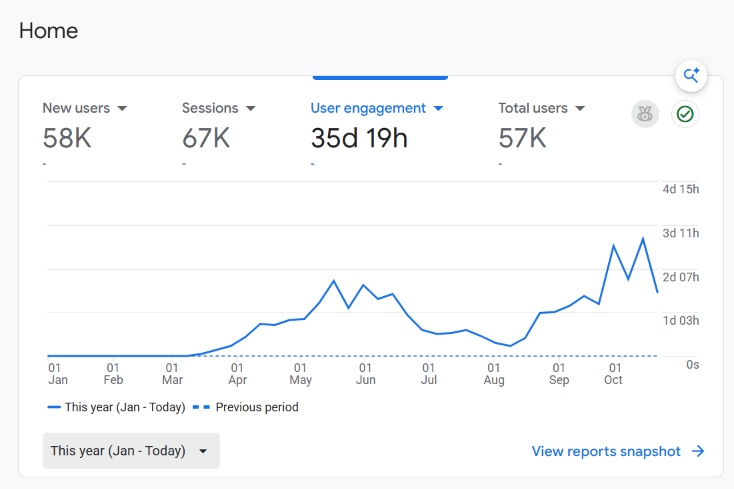
Google Analytics: 58K new users, 67K sessions, and 57K total users in the selected year-to-date view. Select the image to view it at full size.
These reports measure different things. Search Console reports Google Search performance, while Analytics records activity from different traffic sources. The Analytics figures should not be treated as Google Search traffic alone.
5. Results After the SEO Work
By late August, Google Search traffic had improved from its lowest point. The gains continued through September and October, with daily clicks reaching an average of 560 during October 12–21.
Daily Clicks
The reported daily average rose from six clicks during the low period to 560 in October 12–21.
Daily Impressions
Average daily impressions reached 24,708 during October 12–21.
The results show that search visibility returned and grew during the period when SEO work was being carried out. Several changes were made, so the data does not prove that any single task caused the recovery or that the website received a confirmed Google Spam Update penalty.
6. Lessons from This SEO Recovery Case Study
A large traffic drop needs careful review. Making random changes or disavowing every suspicious-looking backlink is not a reliable recovery plan. The work should start with the data and focus on the problems found during the review.
- Compare Search Console data before and after the traffic drop.
- Review backlinks before deciding whether any action is needed.
- Improve old content so it answers readers’ questions clearly.
- Check site speed, indexing, crawling, and other technical issues.
- Build relevant links instead of focusing only on link quantity.
- Track results over time and avoid claiming that one change caused every improvement.
Conclusion
This case study shows how an informational website recovered from a major Google Search traffic decline and returned to stronger daily click and impression levels. The work included backlink review, selected disavow actions, content updates, relevant link building, and technical SEO improvements.
Although the timing raised questions about a possible Google Spam Update impact, the available data does not confirm a direct cause. The main lesson is to review the evidence, fix the issues you can identify, and measure progress over time.
Visit My Homepage